345 private links


dickover n. : a modal panel, popover, or curtain presented by a website or app, deliberately obscuring its own content to frustrate the user with an unwanted, unnecessary, mandatory interaction; e.g. asking the user to accept “cookies”, subscribe to a newsletter, install the website’s mobile app, agree to terms of service, or anything else that the user couldn’t give two shits about.
Similarly there are the dickbar
Sanitize -> Désamorcer: je dirais plutôt "nettoyer".
La plupart des traductions semblent cohérentes.
Ça fait plusieurs fois que je vois passer la notion de "instant software", pour du logiciel qui serait tellement facile et peu cher à produire par des agents de codage que ça ne vaudrait plus la peine de le conserver au-delà de ses usages immédiats.
L'auteur propose "touillette logicielle" pour les nommer en français.
Bref, comme j'écris beaucoup sur les RFC, je vais m'en tenir à la terminologie des RFC, où « échange de clés » (key exchange) désigne toutes les méthodes d'établissement de clé et où « encapsulation de clé » est un sous-ensemble des méthodes d'échange de clés.
Hahaha
They are CSS "cascading" variables, and they can also be custom properties with @property.
Un site dédié: chiffrer à la place de crypter.
I think taste is the ability to adopt the set of engineering values that fit your current project.
map and filters looks good in JS for arrays, but they are absent in Golang for example. "[...] it would be far too arrogant for me to say that engineers who prefer for loops are simply less skilled. In many cases, they have technical capabilities that I don’t have. They just care about different things. In other words, our disagreement comes down to a difference in values."
About arguing the best solution:
Even if the big technical debates do have definite answers, no working software engineer is ever in a position to know what those answers are, because you can only fit so much experience into one career.
Almost every decision in software engineering is a tradeoff, and immature engineers are too inflexible about their taste.
The taste is a mix of priorities over resiliency, speed, readability, correctness, flexibility, portability, scalability and development speed. There are many other engineering values: elegance, modernness, use of open source, monetary cost of keeping the system running, and so on. All of these are important, but no engineer cares equally about all of these things.
A bad taste means values that are not a good fit for the project.
good taste is the ability to select the right set of engineering values for the particular technical problem you’re facing
L'auteur argumente sur une meilleure nomenclature des thèmes numériques. On y trouve:
Numérique: technologies numériques, équipements numériques.
GAFAM: multinationales du numérique ou géants du numériques.
Cloud: Plateforme de services numériques (j'opterais plus pour le terme centre de données)
Dématérialisation: numérisation, déshumanisation (ce terme de dématérialisation est plus qu'incorrect)
Écran: interfaces numériques (puisqu'il n'y a pas que des écrans, comme les assistants vocaux)
IA: outils statistiques générateurs de contenus, automates computationnels, systèmes algorithmiques d'aide à la décision
des jeunes: des enjeux du monde numérique. C'est devenu social, et impacte toute la société (inégalités, travail, compétences, ...)
The picture clarify a lot: https://alperenkeles.com/posts/vocab-for-testing/types-of-testing.png
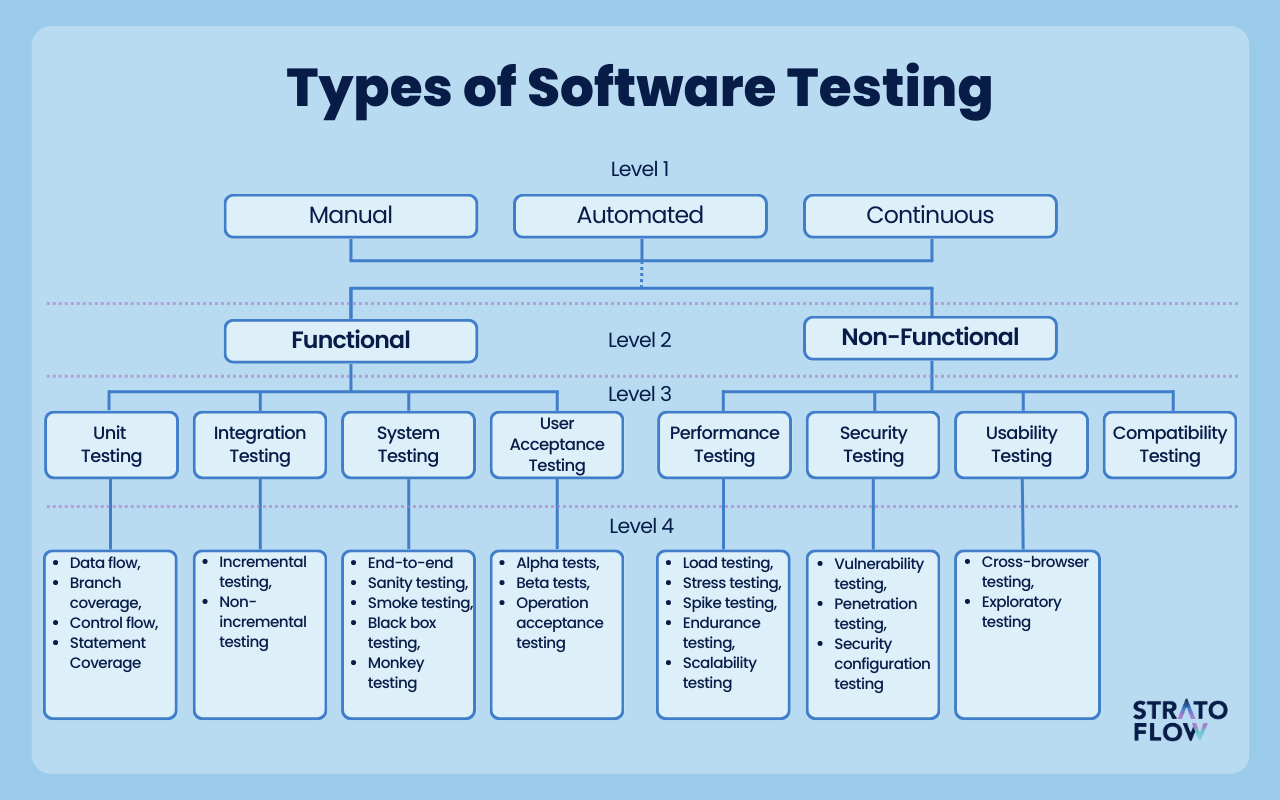
How to define the vocabulary?
- scope (I/O, stateful or stateless, isomorphic)
- purpose and hypotheses: functional correctness, time of execution, security, system resilience,
- oracles: humans with tinker testing; examples; inline assertions; properties
- methods: static analysis, enumeration (cover all posibility), randomness, environment simulation (Deterministic Simulation Testing)
Follow-Up: https://matklad.github.io/2022/07/04/unit-and-integration-tests.html
Think about unit and integration-testing in terms of:
- Purity corresponds to the amount of generalized IO the test is doing and is correlated with desirable metrics, namely performance and resilience.
- Extent corresponds to the amount of code the test exercises. Extent somewhat correlates with impurity, but generally does not directly affect performance.
Vibe coding does not mean “using AI tools to help write code”. It means “generating code with AI without caring about the code that is produced”.
David Larlet : « How do you name the contrary of “vibe coding” the… » - Mastodon for/by David Larlet
What is the opposite of "vibe coding"?
It could be someone who does everything like a professional who is never needed. "Overkill coding"?
Local-first allows users to enjoy all the benefits cloud apps bring (like seamless real-time collaboration, syncing, auto backups) while keeping the data ownership aspect from traditional desktop software.
An ejectable app allows users to "eject" at any time:
- get a zip of all the data
- download the binary to run on a backend sync server or locally
- able to import to the app again
and a comment from Sebsauvage:
- the data format must be open and free
La pourriture de cerveau (brain rot): Détérioration supposée de l'état mental ou intellectuel d'une personne, notamment considérée comme le résultat d'une surconsommation de contenu (aujourd'hui particulièrement en ligne) considéré comme insignifiant ou non stimulant »
La merdification (enshittification) est le terme désignant la détérioration progressive d'un service ou d'un produit, en particulier d'une plateforme en ligne, provoquée par une réduction de la qualité du service fourni résultant de la recherche de profit.