338 private links
How CSS helped


Derrière ses intentions en apparence louables, le minimalisme participerait donc à une forme de domination culturelle et de renforcement d’inégalités entre les classes sociales. « Les personnes en situation de pauvreté ont toujours été des déconsommateurs mais ce statut n’est pas socialement désirable. Il a donc fallu que les classes sociales supérieures réinterprètent les signaux de l’air du temps et les transforment afin de les intégrer à leurs codes, développe Fanny Parise. À n’importe quelle époque, les classes sociales supérieures doivent imposer une culture légitime afin d’assurer le maintien de leurs privilèges. »
Il en résulte un minimalisme à deux vitesses, avec d’un côté ceux qui perçoivent la sobriété comme une forme de prestige et d’ostentation responsable et, de l’autre, ceux qui n’ont pas d’autre choix que de la pratiquer, par manque réel de moyens financiers.
« Redisons-le, le minimalisme en Occident est avant tout consumériste. Malgré les apparences, il n’a rien de contre-culturel. Il est même le cœur du capitalisme responsable. Les prix exorbitants sont le prix de la bonne conscience qui cache un enjeu, toujours le même, de distinction sociale : si c’est cher, c’est que c’est rare et que ce n’est pas accessible à tout le monde. L’image de prestige est celle de la violence sociale »
« Si on veut des résultats efficaces, vraiment écologiques et justes socialement, il faut que cela vienne des politiques publiques » ‒ Anne de Rugy, sociologue
Tiens tiens tiens
- Versatile: we use the web for many things
- Decentralized: there is no one single arbiter
- Resilient: the development is hostile as there is a lot to consider such as multiple browsers, network condition, input modes, and third-party scripts,...
- Responsive: there is a responsive design on the web
- Adaptable: range of form factors, device capabilities, and specialized browsing modes.
- Accessible or at least can be accessible: It represents a rare space where a disabled individual may operate free from the immense amount of bias, misunderstanding, and outright hate that is pervasive throughout much of society.
- Inexpensive: the fact remains that you can achieve an incredible amount of functionality with a small amount of code. There is ~$40 for internet-ready smartphones.
- Diverse: the list of browsers is huge. This diversity encourages innovation.
- Standardized: with the w3c. It is well documented with the Mozilla Developer Network, StackOverflow, and blogs, ... Plus 20 years old web pages are still usable today.
- Open: the standardization and consensus are transparent. it helps to disincentive more abstract threats like adversarial interoperability. OSS FTW.
Create Beautiful Fullscreen Scrolling Websites
fullPage.js is designed to be easy to use and customize. It includes tens of examples, great documentation, and both community and personal support.
The project is useful websites similar to slides or demos.
Avoiding media queries is possible but unreadable.
Some SCSS mixins make it more readable though: https://github.com/ryevych/adaptiveValueFunction/blob/main/scss/adaptiveValueFunction.scss
Extending the atomic design with applications and principles:
Applications provide a place to document overall product and business information to give context about how and why the pages within an application are organized. Principles were added below the Atoms as a repository for our generalized interaction patterns; patterns such as how and why to use animations or the proper way to truncate text.
An example of style guide for content
From Tim Berners-Lee
Date: 1998, last change: 2013-03-04 22:56:21
When you design a system or a language, if the features can be broken into relatively loosely bound groups of relatively closely bound features, then that division is a good thing to be part of the design. This is just good engineering. It means that when you want to change the system, you can with luck in the future change only one part, which will only require you to understand (and test) that part. This will allow other people to independently change other parts at the same time. This is just classic good software design and books have been written about it. The corollary, the TOII is less frequently met.
Your productivity is now less important than the productivity of the whole team.
If one universal talent separates successful leaders from the pack, it’s communication skills. It doesn’t matter whether you choose to dive deep into technology, or become a manager — if you can’t communicate and listen to what other people are saying, your career growth from this point on will suffer.
On s’adresse à tous ceux qui veulent progresser au delà du stade de développeur senior à 5 – 10 ans d’expérience.
a curated list of high-quality design resources including icons, illustrations, UI/UX kits, graphics, templates and more
One-stop resource for everything related to user experience
The yellow use at the end the three light, main and dark versions: https://miro.medium.com/max/732/1*Z3-7A-fzDVuqEt-tF8fFIQ.png
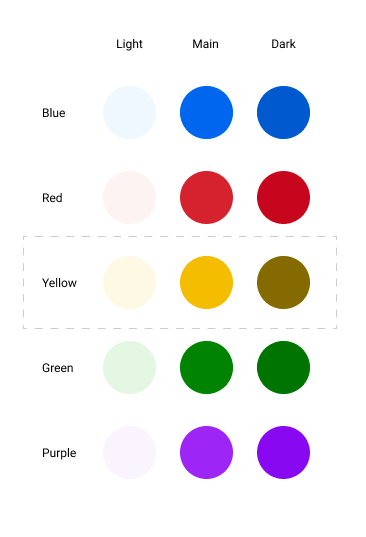
The dark one looks brown but the important part is to mix them.
Scroll horizontally to observe wealth based on pixels
Une carte de la Terre du Milieu adapté à la France
Feature available or not in your current browser
Une des premières leçons du manager sur une équipe : Lâcher prise. Laisser l’équipe faire ses choix et défendre moins fortement les siens, quitte à laisser l’équipe se planter.
L’idée c’est de ne pas être le directeur, juste le manager. C’est à l’équipe de décider, pour favoriser son implication, son initiative, sa responsabilisation, sauf à vouloir une équipe d’exécutant.
Web Content Accessibility Guidelines Success Criterion 2.4.4: Link Purpose (In Context) instructs us to ensure that a link’s accessible name makes sense when separated from its surrounding context. It’s why “learn more about elephants” is a far more effective link name than “click here.”
Cool to know.
This is all about maintaining an equivalent experience by not over-describing something for only a certain subset of people. Here, the goal is to preserve the author’s intentional act of creating a sense of curiosity, regardless of the way someone interacts with technology.
About schema; tables; collections; keys and columns; unique, primary and foreign keys
User-facing state is what someone experiences when they interact with (or try to interact with) an element in some capacity. It is reactive, helping to communicate the ways in which something can be manipulated.
It is also worth noting that on the web, the majority of user-facing state can be communicated programatically. This means that there is an HTML attribute or ARIA declaration that can ensure people who can’t see the content can understand the state something has been set to.
It is different from the application state.
The states:
- resting: the status of something before someone has interacted with it, or other content affects it. Oftentimes referred to as “Base” or “Default.”
- hovered
- active
- focused
- visited
- loading / loaded
- disabled
- hidden
- readonly
- enabled
- checked: marked for sending as data to another internal or external resource. Can be focused, but keeps it's selected state after focus is moved
- unchecked
- undeterminate
- selected / deselected
- dragged / dropped
- collapsed / expanded
- resizing
- dirty: an editable element that has been manipulated on one or more occurences
- pristine: editable element has yet to be manipulated by someone
- saving
- overflowing
- scrolling
- playing / paused / stopped
- sticky
- unstuck: sticky element removed from a side of the viewport back it its original position
A lot of wallpapers are available under this category. Thanks smashing magazine and Cosima Mielke :)