317 private links
Link protocols
relative link protocol
Text fragments
href="#" scrolls to top
href="" reloads the page
href="." reloads the page and remove hash and search strings
href="?" reloads the page, remove the hash and search strings but preserve the query symbol.
href="data:" handle data URLs
href="video.mp4#t=10,20" for media fragments (support is not there yet)
An image fulgurator print on image or a custom view that is visible only to other cameras.
See https://juliusvonbismarck.com/bank/index.php/projects/image-fulgurator/2/
Bon, AXE est donc une marque de merde
Klarna entre autres.
Le simple fait d’avoir un site Web ou un projet numérique suffisait à attirer des dizaines de millions de dollars de financements. Le marché boursier, notamment le NASDAQ, a alors atteint des sommets. [...] Mais en mars 2000, le vent tourne. Les investisseurs se rendent compte que beaucoup de ces entreprises ne sont pas rentables, certaines n'ont même aucun produit fini.
On parle d'un schéma qui semble se répéter avec l'IA.
Torsten Sløk, éminent économiste en chef chez Apollo Global Management:
les principales entreprises du S&P 500 sont « plus surévaluées » que les grandes entreprises au plus fort de la bulle Internet à la fin des années 1990 et au début des années 2000
 ·
·

So because a website HTML/CSS is protected computer program: an ad blocker intervenes in the in-memory execution structures of it; it constitutes an unlawful reproduction and modification.
This was first reject; but a new ruling sent the case back.
There are many reasons, in addition to ad blocking, that users might want their browser or a browser extension to alter a webpage.
As per BGH’s ruling, Springer’s argument needs to be re-examined to determine if DOM, CSS, and bytecode count as a protected computer program.
Mozilla noted that the new proceedings could take up to a couple of years to reach a final conclusion. As the core issue is not settled, there is a future risk of extension developers to be held liable for financial losses.
Google is upscaling videos on delivery. So creators get their videos modified. The user is not informed and can not consent to it.
That's why Peertube or other alternatives are important: whenever Youtube changes some behavior, we need to have the right to at least leave and use something else that better align with our needs.
Arguments clés:
- les blogs sont plus sains que les réseaux sociaux
- les technologies permettent actuellement de créer un blog très facilement, il y en a pour tous les goûts
- l'écriture peut être une thérapie; le blog en est alors l'outil
- chacun maîtrise son temps d'écriture
- suivre d'autres blogs est aisé avec les flux RSS
How to do X in the browser dev tools.
A directory of the web
A friend who plays better chess than me — and knows more math & CS than me - said that he played some moves against a newly released LLM, and it must be at least as good as him. I said, no way, I’m going to cRRRush it, in my best Russian accent. I make a few moves – but unlike him, I don't make good moves1, which would be opening book moves it has seen a million times; I make weak moves, which it hasn't 2. The thing makes decent moves in response, with cheerful commentary about how we're attacking this and developing that — until about move 10, when it tries to move a knight which isn't there, and loses in a few more moves. This was a year or two ago; I’ve just tried this again, and it lost track of the board state by move 9.
we could say that the whole argument that LLMs learn about the world is that they have to understand the world as a side effect of modeling the distribution of text.
LLMs are limited by text inputs: color are numbers, etc...
Ideally, you would want to quantify "how much of the world LLMs model."
“a fundamentally incorrect approach to a problem can be taken very far in practice with sufficient engineering effort.”
Take:
LLMs are not by themselves sufficient as a path to general machine intelligence; in some sense they are a distraction because of how far you can take them despite the approach being fundamentally incorrect.
LLMs will never6 manage to deal with large code bases “autonomously”, because they would need to have a model of the program, and they don’t even learn to track chess pieces having read everything there is to read about chess.
LLMs will never reliably know what they don’t know, or stop making things up.
LLMs will always be able to teach a student complex (standard) curriculum, answer an expert’s question with a useful (known) insight, and yet fail at basic (novel) questions on the same subject, all at the same time.
LLM-style language processing is definitely a part of how human intelligence works — and how human stupidity works.
Rule 1: Only assert properties you are 100% confident about
Rule 2: Do not assert statements about the external world
Rule 3: Assert properties that your code relies on
Rule 4: Pair with coarse-grained recovery for online systems
Rule 5: Make them as easy to deploy as possible
The picture clarify a lot: https://alperenkeles.com/posts/vocab-for-testing/types-of-testing.png
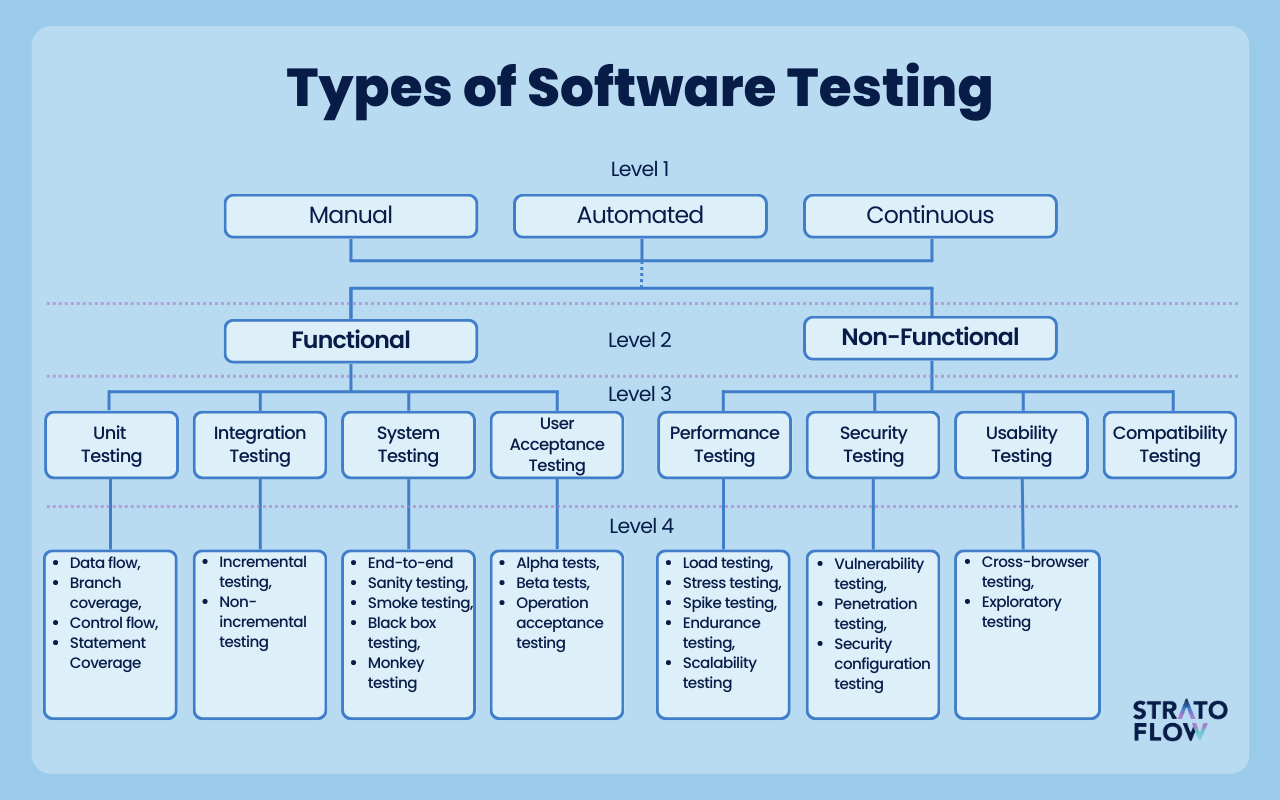
How to define the vocabulary?
- scope (I/O, stateful or stateless, isomorphic)
- purpose and hypotheses: functional correctness, time of execution, security, system resilience,
- oracles: humans with tinker testing; examples; inline assertions; properties
- methods: static analysis, enumeration (cover all posibility), randomness, environment simulation (Deterministic Simulation Testing)
Follow-Up: https://matklad.github.io/2022/07/04/unit-and-integration-tests.html
Think about unit and integration-testing in terms of:
- Purity corresponds to the amount of generalized IO the test is doing and is correlated with desirable metrics, namely performance and resilience.
- Extent corresponds to the amount of code the test exercises. Extent somewhat correlates with impurity, but generally does not directly affect performance.
- think about naming
- don't be afraid to say "no"
- code review is communication
- use multiple iterations of reviews
- don’t be a jerk
- try to run the code
- an opportunity to learn things
- avoid nitpicking
- ask stupid questions
- ask for feedback on the review style
TL;DR js solutions is often better for accessibility. At least information is conveyed.
Popover will be more useful than ever.
The tradeoff is currently the <details> tag with two limitations: the element does not announce a navigation menu is exposed; clicking outside or pressing Esc does nothing.